Electrical Panel Upgrade In Temecula, CA | Landers Electric
With nearly 20 years of electrical experience, Landers Electric specializes in reliable electrical panel upgrades in Temecula, CA. Our licensed electricians handle everything from 100–400 amp service upgrades to Zinsco and Federal Pacific breaker box replacements and Southern California Edison (SCE) permit coordination. Homeowners and businesses trust Landers Electric for safe, NEC and CEC code-compliant installations done right the first time.
📞 Call Us Now: (760) 690-7517
Why Temecula Homeowners are Upgrading to 200-Amp Panels
If you own a home in the Temecula Valley, you already know that the region requires a lot from an electrical system. Between scorching July afternoons where the central air conditioning runs around the clock, the rapid adoption of electric vehicles (EVs) across Riverside County, and the massive shift toward residential solar energy systems, home electrical grids are being pushed to their absolute limits.
Yet, hundreds of homes across master-planned communities in Redhawk, Crowne Hill, Harveston, and the sprawling properties out in the Temecula Wine Country are still running on outdated 100-amp or 125-amp electrical panels.
If your breakers trip frequently, your lights flicker when the A/C kicks on, or you are getting ready to install a Level 2 EV charger, you are likely facing the need for a main electrical panel upgrade.
At Landers Electric, we believe in total transparency. An electrical panel upgrade is a serious, high-ticket home improvement investment. It requires meticulous engineering, city permitting, coordination with Southern California Edison (SCE), and precise execution. This comprehensive guide breaks down absolutely everything you need to know about upgrading your home’s electrical panel in Temecula, California.
1. What is an Electrical Panel Upgrade (and Why Does Your Temecula Home Need One)?
To understand why your home requires a main service panel upgrade, you must first understand the physics of how electricity safely enters and distributes through a modern residential property. Your electrical panel—variously referred to by trade professionals as the breaker box, main load center, or distribution panel—is the central command station for your entire household grid.
Every single watt of electrical energy generated by Southern California Edison (SCE) travels through high-voltage neighborhood distribution lines, steps down through a localized transformer, passes through your physical electric meter socket, and terminates directly at the main lugs of your electrical panel. From this central point, that massive incoming current is safely divided into individual, isolated parallel branch circuits protected by circuit breakers before traveling through your walls to power appliances, lighting, and outlets.
The Plumbing Analogy: Amperage vs. Voltage
The easiest way for a homeowner to conceptualize electrical capacity is to compare it to a residential plumbing system. In this analogy:
Voltage (Volts): This represents the water pressure. In standard American residential setups, this pressure is delivered at a fixed dual-phase rate of 120/240 volts.
Amperage (Amps): This represents the actual volume of water or the physical width of the main pipe.
Wattage (Watts): This is the total volume of work being done (W = VxA).
If a home has a massive city water main but the pipe leading from the street into the house is only a tiny half-inch wide, you cannot simultaneously run the backyard spikes, turn on the washing machine, and take a shower without the water pressure dropping to a trickle.
The exact same bottleneck occurs in an electrical system. If your home is capped at a 100-amp service, it doesn’t matter how energy-efficient your new electronics are, or how many smart devices you buy—your physical "main pipe" can only handle a maximum of 100 amps of total electrical volume at any time. If you attempt to draw 105 amps of demand, the system breaks under the strain, and the main safety switch trips to prevent the wires from overheating and causing a structural fire.
The Historical Context: The Modern Household vs. The 1980’s Grid
To appreciate why so many neighborhoods across the Temecula Valley—such as early phases of Redhawk, Crowne Hill, Harveston, and established properties near the Temecula Wine Country—are facing an infrastructure crisis, we have to look back at how homes were built decades ago.
When residential developments exploded in Southwest Riverside County during the 1980’s, 1990’s, and early 2000’s, a 100-amp or 125-amp panel was the production builder standard. At the time, this provided an abundance of power headroom. The average American household in 1990 relied on a low-draw standard-definition television, a refrigerator, a simple microwave, and basic overhead incandescent lighting.
Fast forward to today. The structural energy landscape of a modern California household has evolved dramatically due to sweeping technological advancements and aggressive clean energy mandates pushed by the state.
This means older electrical systems are handling heavy-draw, continuous appliances they were never engineered to support:
High-Draw Electric Vehicle (EV) Chargers: A dedicated Level 2 home charging station typically requires a dedicated 40amp to 60 amp circuit breaker, pulling up to 32 to 48 amps of continuous, unrelenting current for hours at a time. On an old 100-amp electrical panel, a single car charger uses roughly 40% to 50% of the home's total available electrical capacity.
All-Electric HVAC Transitions: High-efficiency multi-zone electric heat pumps and 5-ton central air conditioning condensers required to combat brutal, triple-digit Temecula summers demand massive startup and running currents, often requiring 30-amp to 50-amp dedicated lines.
Electrification of Appliances: Induction cooktops, electric water heaters, and high-capacity clothes dryers draw massive, simultaneous electrical loads that legacy panel configurations were never scaled to handle.
Smart Home Infrastructure & Spas: Modern backyard transformations, including variable-speed pool pumps, dedicated hot tub circuits (50-60 amps), whole-house quiet fans, and elaborate multi-monitor home offices, place a relentless draw on the system.
If a family living in an unmodified 100-amp home attempts to charge their electric vehicle in the garage while the central A/C compressor kicks on to combat the afternoon heat, and someone starts an electric dryer or oven, the aggregate electrical can potentially exceed the continuous duty thresholds of a 100-amp or 125-amp main breaker.
Future-Proofing for California's Green Energy Mandates
Upgrading your main service panel is no longer just about fixing a current inconvenience; it is a critical step in strategic home asset management. According to the official California Energy Commission (CEC) Title 24 Energy Code Updates, all major residential building alterations and renovations must prioritize electric-ready and electric-preferred frameworks. This makes homes carrying low-amperage services highly susceptible to immediate code compliance issues and functional property depreciation.
Furthermore, when residential solar panel arrays or battery storage backups are installed, utility providers must enforce strict structural safety rules. As detailed in the Southern California Edison (SCE) Solar Technology Guidelines, older electrical panels routinely fail to meet the modern safety thresholds required to interconnect clean energy arrays.
This is largely due to the National Electrical Code (NEC) 120% Rule. This safety standard dictates that the combined electrical input from your utility lines and your solar panels cannot exceed 120% of the total amperage rating of the physical copper busbars inside your box.
On a standard 100-amp panel with 100-amp busbars, your capacity for backfeeding solar power is severely throttled—often forcing homeowners into expensive, unexpected panel replacements before their solar system can be legally authorized by the utility. Upgrading to a modern 200-amp solar ready main service panel carrying a heavy-duty 225-amp busbar instantly eliminates this problem, allowing for maximum solar generation, home energy storage expansion (like Tesla Powerwalls), and unrestricted EV charging capacity.
Need help with your electrical panel upgrade? Call us today for a free quote over the phone!
2. Top Signs You Urgently Need a Panel Upgrade or Replacement
While a significant percentage of electrical panel modernizations across Southwest Riverside County are proactive upgrades designed to facilitate clean-energy asset integration, a massive portion of our daily field operations is driven by immediate, acute structural warning signs. Your home's service panel is engineered to be a silent, protective barrier between high-voltage grid power and your living spaces. However, structural degradation, mechanical wear, environmental exposure, and system fatigue eventually cause components to fail.
According to tracking data from the National Fire Protection Association (NFPA) Electrical Fire Statistics, electrical failures or malfunctions remain one of the leading causes of residential home fires and property damage across the United States. Recognizing the exact physical, visual, and acoustic warning signs of a failing electrical system can literally mean the difference between a routine trade modification and a catastrophic structural loss. If your Temecula property exhibits any of the following technical indicators, your electrical system is actively flashing an emergency warning light.
Flickering, Dimming, or "Brown-Out" Performance in Overhead Lighting
One of the early warning signs of an overtaxed electrical distribution system is voltage drop, visually experienced by the homeowner as dimming, flickering, or stuttering LED and incandescent lamps. This symptom is most prominent when a massive inductive load—such as a 4-ton or 5-ton central air conditioning condenser or an electric whole-house fan—cycles on during a hot summer afternoon.
When a large electric motor starts up, it requires an instantaneous surge of power known as Inrush Current or Locked Rotor Amps (LRA). This startup surge can be three to five times higher than the appliance's normal running current.
If your main service panel is restricted to a 100-amp capacity, or if the underlying copper busbars have degraded, the panel cannot deliver this instantaneous massive rush of current without pulling power away from other branch circuits. This results in an immediate, measurable voltage drop right at the main busbar.
Because modern LED driver electronics are highly sensitive to incoming voltage fluctuations, even a brief 3% to 5% drop in voltage will cause visible stuttering or dimming. If your lights stay dim for several seconds after an appliance kicks on, your electrical system could be experiencing this voltage drop issue.
Circuit Breaker Tripping
A circuit breaker is an engineered safety device equipped with two distinct tripping mechanisms: a thermal element for long-term overload protection and a magnetic element for instantaneous short-circuit protection. When electrical current flows through a standard thermal breaker, it passes through an internal bimetallic strip. As the current increases, the friction of moving electrons creates heat, causing the two metals to expand at different rates until the strip physically warps and triggers the mechanical spring-loaded trip mechanism.
If you are repeatedly forced to walk out to the side of your house or into your garage to reset a flipped breaker, it means you could be pushing your electrical system beyond its engineered safety thresholds.
Worse yet, circuit breakers are mechanical switches with a finite operational lifespan. Every single time a breaker trips under a heavy load, a micro-arc occurs across its internal contacts, leaving behind a microscopic layer of carbon crusting. Over time, this degradation fundamentally alters the structural integrity of the bimetallic strip.
Eventually, the breaker suffers from mechanical fatigue, leading to one of two outcomes:
Nuisance Tripping: The breaker weakens completely, flipping off continuously under perfectly normal everyday loads.
Mechanical Seizure (The Worst Case): The internal contacts weld themselves together, preventing the breaker from ever tripping again during an overload. When this happens, unregulated high-amp current pours through your walls unchecked, heating the copper building wire to over 1,000°F until the structural framing logs inside your walls ignite.
Thermal Anomalies, Discoloration, and Carbon Tracking
Under normal operating conditions, your electrical load center should remain cool to the touch. Electricity naturally generates small amounts of heat due to electrical resistance, but a properly torqued, code-compliant panel dissipates this heat seamlessly. If you can physically feel heat radiating from the deadfront cover of your breaker box, you are dealing with a severe, active hazard.
Thermal anomalies inside an electrical panel are almost always caused by high-resistance connections or electrical arcing. Over years of thermal cycling, terminal lugs can back off. Loose connections create a microscopic air gap that the incoming current must jump across. This jumping process is called Arcing, and it generates extreme localized temperatures that can exceed 3,000°F.
As this localized heat builds up inside the panel casing, it manifests as:
Distinct blistering or bubbling of the paint on the exterior steel enclosure.
Deep discoloration, charring, or whitening of the plastic structural housing surrounding individual breakers.
Meltdown of the colorful thermoplastic insulation surrounding the primary neutral and hot conductors inside the panel box.
Carbon tracking lines across the non-conductive backplates of the panel assembly.
If you detect a distinct chemical, fishy, or burning plastic odor emanating from the general vicinity of your electrical service area, the interior components could be actively melting down.
Acoustic Faults: Continuous Buzzing, Hissing, or Sizzling Sounds
A healthy electrical panel operates in complete, absolute silence. If your breaker box is emitting audible sounds, it is an absolute indicator of component failure or active electrical faults. Homeowners frequently report hearing a distinct buzzing, humming, sizzling, or clicking sound coming from their panel wall.
These acoustic signatures can be broken down into two categories:
Magnetic Harmonic Humming: A low-pitched, continuous 60Hz hum is typically caused by loose internal components within an older breaker or a vibrating busbar assembly responding to the alternating current grid frequency. This indicates that the physical structural bindings of the panel components are breaking down.
High-Frequency Sizzling or Crackling: A sharp, erratic sizzling, spitting, or crackling sound indicates an active Arcing Fault. This is the sound of electricity violently jumping across air gaps between loose wire terminations or pitted breaker contact jaws directly resting on the main busbars. Arcing faults are highly unstable, generate incredible spikes of heat in milliseconds, and represent an imminent structural fire threat.
Mechanical Corrosion and Moisture Intrusion
In the Southwest Riverside County region, the vast majority of residential electrical panels are flush or semi-flush mounted directly onto the exterior stucco walls of the home. This configuration exposes the primary load center to regional outdoor environmental elements, including driving seasonal rain and extreme thermal shifts.
Over time, failing weather seals on the top hub of the panel or degrading stucco boundaries allow moisture to seep directly into the interior gutter spaces of the enclosure. Water and electricity are an incredibly destructive combination.
Moisture introduction causes rapid oxidation, resulting in white rust on aluminum components and green rust across critical copper connections. This corrosion forms a highly resistive crust directly over the metallic surfaces.
Because rust is an incredibly poor conductor of electricity, it restricts current flow, skyrockets electrical resistance, and drives extreme localized heat generation right where the breakers clamp onto the main power busbars. If you open your panel door and see any powdery rust residue, water staining streaks, or white scaling down the breaker columns, your electrical panel is probably in need of a replacement or upgrade. You can review safety inspection standards and product safety metrics regarding infrastructure breakdown via the Consumer Product Safety Commission (CPSC) Electrical Safety Guides to see how federal investigators track residential mechanical deterioration risks.
3. The Homeowners Insurance Crisis: Outdated Panels and Policy Non-Renewals
There is another massive trigger driving main service panel modernizations across California that has absolutely nothing to do with expanding household capacity, buying an electric vehicle, or mounting solar arrays. Instead, it is an issue tied directly to financial survival and property asset protection: homeowners insurance eligibility. The property and casualty insurance market across the state of California has experienced an unprecedented contraction. Due to soaring catastrophic reinsurance costs, severe rebuilding inflation, and historic underwriting losses, major national insurance carriers have systematically frozen new business or placed incredibly strict risk filters on existing renewals.
Under the state's ongoing California Department of Insurance Sustainable Insurance Strategy, insurance carriers are being pushed to restore market availability, but they are doing so by executing microscopic property risk assessments.
Actuaries and underwriters are looking for any possible reason to eliminate high-liability profiles, and vintage electrical infrastructure sits at the absolute top of their exclusion checklists. If your home features an un-upgraded main load center built between the 1960s and the late 1990s, you are highly likely to receive an sudden notice of policy non-renewal or an unmanageable premium hike. In the current market, failing to prove your electrical panel is modern, safe, and code-compliant can leave your asset entirely uninsurable, which instantly triggers a technical default on your underlying mortgage agreement.
How Underwriters Flag Your Infrastructure: The 4-Point Inspection
When a home is sold, when a policy is transferred, or when an existing policy hits a milestone renewal date, insurance companies deploy field inspectors to execute what is known in the industry as a 4-Point Inspection. This targeted evaluation focuses strictly on the four primary systems that present the highest statistical liability for major property claims: the roof, the plumbing lines, the HVAC infrastructure, and the electrical distribution system.
During the electrical phase of a 4-point inspection, the inspector is legally required to remove the deadfront cover of your electrical panel to photograph and document critical safety variables:
The Manufacturer Brand: The physical brand name stamped on the UL label of the enclosure.
The Conductor Material: Verifying whether the branch circuits utilize modern copper, modern stranded aluminum, or dangerous single-strand solid aluminum wiring from the late 1960s and early 1970s.
Evidence of Structural Distress: Documenting any evidence of overheating, unpermitted circuit additions, double-tapped breakers (where two separate wires are crammed into a single terminal slot engineered for one), or active carbon scoring.
If the inspector documents a legacy panel brand that has been blacklisted by corporate underwriting guidelines, the carrier will issue an immediate ultimatum: replace the complete service assembly via a licensed C-10 electrical contractor within 30 days, or face immediate policy cancellation.
The Engineering Failure Mechanics of Blacklisted Panel Brands
Insurers are not blacklisting these legacy panels arbitrarily. Decades of forensic engineering data, consumer safety investigations, and court-ordered product recalls have proven that specific vintage brands suffer from systematic, catastrophic mechanical failure modes. If your home's exterior wall features any of the following legacy brands, your property is sitting on a severe, active liability.
Federal Pacific Electric (FPE) & The Stab-Lok Breaker Crisis
Manufactured from the 1950s through the 1980s, millions of Federal Pacific Electric panels were installed in track homes across California. The core hazard of an FPE system lies entirely within its patented Stab-Lok circuit breaker design.
According to forensic testing data filed directly with federal safety regulators in reports like the Consumer Product Safety Commission (CPSC) Jesse Aronstein FPE Investigation Summary, it was discovered that FPE Stab-Lok breakers suffer from a staggering safety failure rate, with up to 51% to 80% of breakers failing to trip properly during an active overload condition.
Under standard National Electrical Code safety protocols, if a circuit is overloaded, the breaker must trip within seconds to isolate the current. When an FPE breaker faces a massive overload, its internal mechanics regularly lock up or jam. Instead of snapping open, the breaker allows thousands of watts of unregulated electrical energy to pour continuously down thin copper building wires.
The wire insulation instantly liquifies and vaporizes, filling your wall cavities with highly toxic, superheated gas until the surrounding wooden 2x4 framing studs burst into flames. A New Jersey state superior court officially ruled that the company committed systemic fraud by knowingly distributing equipment that completely failed standard safety baselines, a history documented extensively in consumer legal databases like the InspectAPedia Federal Pacific Class Action Lawsuit Record.
Zinsco & Sylvania-Zinsco Service Centers
Ubiquitous throughout the 1970s and 1980s, Zinsco design configurations introduced a fatal engineering flaw regarding how the circuit breakers physically clamp onto the main power distribution bars. In a standard modern panel, breakers clip securely over a robust vertical bus bar. The Zinsco design utilized unique, twin-pronged aluminum bus bars that the breakers zipped directly over.
Over time, the specific aluminum alloy composition used by Zinsco interacts destructively with the continuous thermal expansion and contraction cycles of daily household power usage. This leads to a severe oxidation process known as Galvanic Corrosion. This corrosion creates an incredibly high layer of electrical resistance between the breaker contact jaws and the aluminum bus bar.
As resistance skyrockets, extreme localized heat is generated directly inside the panel casing. Temperatures routinely climb high enough to physically melt the internal plastic casing of the circuit breakers directly onto the metal bus bar. Once a breaker's plastic housing warps and fuses to the bus bar, the breaker's internal spring-loaded trip mechanism is mechanically frozen. It can never trip again.
The panel transforms into a highly volatile, completely unregulated conduit that will dump lethal amounts of high-voltage current through your home during a short-circuit event.
Challenger Panels (The Hidden Arcing Hazard)
Extremely common in homes built throughout the late 1980s and the entirety of the 1990s, Challenger electrical panels were manufactured to be a low-cost, high-volume builder solution. While Challenger panels look perfectly modern and clean to the untrained eye, they carry a deeply hidden internal manufacturing defect.
The specific formulation of thermoplastic material utilized to construct the internal breaker housing and the structural supports for the bus bars was highly unstable under long-term thermal loads. Under normal everyday household draws, this plastic rapidly degrades, becomes incredibly brittle, and cracks.
Once the structural plastic matrix fractures, the underlying copper or aluminum bus bars can physically shift out of alignment inside the sheet metal enclosure. This misalignment creates micro-gaps between the breaker terminals and the hot bars, resulting in continuous, high-intensity Arcing Faults.
These arcs generate intense localized heat spikes that can exceed 3,000°F in microseconds, easily melting through the structural steel casing of the box and igniting any nearby building materials. Because of these distinct structural fire threats, modern major carrier underwriters—ranging from State Farm and Farmers to regional property specialists—now mandate immediate wholesale replacement of these legacy panel arrays.
The Financial Reality of Non-Compliance
Attempting to bypass an insurance panel replacement demand by shopping for a different carrier is no longer a viable strategy in California. Virtually all major admitted property insurance carriers utilize centralized underwriting databases to track property-specific risk data.
If one carrier drops your coverage due to an un-upgraded Federal Pacific, Zinsco, or Challenger panel, that risk profile is visible to competing firms. Your only alternative option becomes the California FAIR Plan, the state-mandated insurer of last resort.
However, enrollment statistics tracked on platforms like the California FAIR Plan Property Resource Center show that enrollment has climbed past 600,000 policies, with premiums continuously rising while providing highly restricted coverage that completely excludes standard liability and water damage protections.
Investing in a professional, permitted, code-compliant 200-amp main service panel upgrade from Landers Electric is the only permanent mechanism to completely satisfy underwriting compliance mandates, protect your property value, secure ultra-competitive premier insurance tiers, and guarantee complete physical peace of mind for your family.
Need help with your electrical panel upgrade? Call us today for a free quote over the phone!
4. The Standard: Upgrading from 100-Amps to 200-Amps
For most homes built throughout Southwest Riverside County, a 200-amp main service panel upgrade is the best choice for capacity, safety, and future upgrades. While a 100-amp or 125-amp panel was standard for homes built in the 1980s and 1990s, today’s electronics and appliances require a much larger electrical capacity to run safely.
To see why upgrading makes sense, look at how household power capacity actually works.
Doubling Your Total Power Capacity
Think of your electrical panel as a highway. Amperage is the number of lanes, and wattage is the volume of traffic that can safely move at one time. When you upgrade from a 100-amp panel to a 200-amp panel, you are physically doubling the amount of power your home can pull from the utility grid.
Here is how total household power breaks down by panel size:
100-Amp Panel: Provides a maximum of 24,000 Watts of total power.
125-Amp Panel: Provides a maximum of 30,000 Watts of total power.
200-Amp Panel: Provides a maximum of 48,000 Watts of total power.
Moving up to a 200-amp panel does not just add more physical slots for breakers—it expands your total capacity from 24,000 Watts to 48,000 Watts.
The 80% Safety Rule for Constant Power
While a panel has a maximum limit, electrical safety codes dictate that a home should never pull full power for hours at a time. For continuous loads—appliances that run for three hours or more, like air conditioning or EV chargers—you can only safely use 80% of the panel's total capacity.
This safety rule is where older, smaller panels run into a major bottleneck.
The 100-Amp Panel Safety Limit
Safe continuous limit: 80 Amps (80% of 100 Amps)
Real-world power capacity: 19,200 Watts #### The 200-Amp Panel Safety Limit
Safe continuous limit: 160 Amps (80% of 200 Amps)
Real-world power capacity: 38,400 Watts
Why This Matters for EV Chargers and Air Conditioning
A modern Level 2 electric vehicle home charger requires a 50-amp breaker, which means it continuously draws 40 Amps of power while charging your car.
On an old 100-amp panel, that single car charger swallows 50% of your entire home’s safe operating limit (40 Amps out of your 80-amp safe limit). If your central air conditioner kicks on while the car is charging, it draws another 25 to 30 Amps. That leaves you with a tiny margin of just 10 to 15 Amps for the rest of your house—including your refrigerator, lights, TV, and kitchen appliances.
Upgrading to a 200-amp panel bumps your safe limit to 160 Amps, allowing your car charger, air conditioner, and major appliances to run at the same time without overloading the system or tripping the main breaker.
Upgrading for Solar and Battery Storage (The 120% Rule)
If you plan to install solar panels or battery backups like a Tesla Powerwall, a panel upgrade is often required by the utility company. This is due to an electrical safety regulation known as the 120% Rule.
The copper or aluminum bars inside your panel (called busbars) are designed to handle a specific amount of electricity. The 120% Rule prevents the combined power from the utility grid and your solar panels from overloading and overheating those metal bars. The safety code states that the main utility breaker plus your solar breaker cannot add up to more than 120% of the panel’s total rating.
Here is how that rule limits your solar options on an old panel versus a modern upgrade:
The 100-Amp Panel Solar Bottleneck
Older 100-amp panels usually have internal bars rated for exactly 100 Amps.
Maximum allowed capacity under the safety rule: 120 Amps (120% of 100 Amps)
Subtract your 100-amp main breaker: Leaves only 20 Amps of space for solar.
This limits you to a very small solar system. If you try to install a larger solar array to completely wipe out your electric bill, the utility company will reject the project because it violates safety codes.
The 200-Amp Upgrade Solar Freedom
Modern, high-quality 200-amp panels are built with heavy-duty internal bars rated for 225 Amps, even though they use a standard 200-amp main breaker.
Maximum allowed capacity under the safety rule: 270 Amps (120% of 225 Amps)
Subtract your 200-amp main breaker: Leaves a massive 70 Amps of space for solar.
By upgrading, your solar capacity jumps from 20 Amps to 70 Amps. This gives you plenty of room to install a large, high-output solar system and multiple battery storage backups to power your home efficiently and legally.
5. Working with Southern California Edison & The City of Temecula
An electrical service panel upgrade is a major infrastructure project, not a weekend DIY job. Because your main panel connects high-voltage power lines directly to your home, it falls under strict local laws and safety codes.
To upgrade a panel in the Temecula Valley, you must follow the technical requirements of Southern California Edison (SCE) and the safety codes enforced by the City of Temecula Building and Safety Division.
Skipping proper coordination with either of these entities can lead to stopped projects, failed code inspections, or utility lockouts that leave your home without power.
Meeting SCE’s Service Rules
Southern California Edison manages its grid using a strict manual of engineering requirements. Every single panel on their network must meet these rules.
The moment you replace an old 100-amp panel, your home loses its "grandfathered" status. The entire layout of your electrical service drop must be brought up to modern specifications outlined in the SCE Electrical Service Requirements (ESR) Manual.
Important Space and Clearance Rules
SCE enforces strict spatial rules so their technicians can safely access your meter or cut power during an emergency. The most common requirements include:
The 3-by-3 Working Space: You must keep a completely clear workspace that is 3 feet deep and 3 feet wide directly in front of your electric meter. This clear zone must go from the ground up to a height of 6.5 feet. It cannot be blocked by trees, bushes, block walls, or trash cans.
Gas Meter Distance: To eliminate the risk of an electrical spark igniting a gas leak, your new electrical panel must sit at least 3 feet (36 inches) away from your gas meter or any pressure relief valves.
No Covered Patios or Overhangs: A very common violation in older Temecula neighborhoods happens when a homeowner builds a patio cover or pergola over the side yard where the electric meter sits. SCE rules strictly forbid meters from sitting under any roof overhang or structure that prevents a technician from putting up a standard ladder to service the line.
Following California's Title 24 Safety Codes
Every city building department across Southwest Riverside County operates under California’s strict Title 24 Building Standards. The state updates these laws frequently to push homes toward total electrification. You can review the specifics on the California Energy Commission Title 24 platform.
When Landers Electric pulls an electrical permit through the City of Temecula Building and Safety Division Portal, we handle all the engineering paperwork to prove your new setup complies with these updated codes. This ensures your home’s grounding system is heavy-duty enough to safely handle large power draws—like the variable-speed central air conditioners needed to beat triple-digit Inland Empire summer heat waves, modern electric stoves, and Tesla Powerwall setups.
Securing a proper city permit protects your property value, keeps your homeowner's insurance policy valid, and creates an official legal record that the work was done safely by a licensed, bonded C-10 electrical contractor.
6. The Step-by-Step Logistics: From SCE Application to Inspection Day
Because an electrical panel replacement interfaces directly with regional high-voltage power grids, it requires strict adherence to utility-level engineering and municipal protocols. While Landers Electric manages this entire multi-week administrative and physical workflow on behalf of our clients end-to-end, understanding the exact checkpoints ensures a predictable project lifecycle.
Here is the exhaustive, 12-step breakdown of how a professional 100-amp to 200-amp service panel upgrade is executed in the Inland Empire:
Step 1: Preliminary Site Capacity Analysis (How do I know if my home's electric panel needs an upgrade?)
Before submitting a single document to the utility company, a master electrician must evaluate your home's current physical infrastructure. We audit your existing electrical panel configuration, calculate current household continuous loads, and check nearby grid assets. Contractors and advanced homeowners can check broad regional circuit availability using the SCE Power Site Search Tool (PSST) Resources to verify local circuit load forecasts and review public distribution capacity across Riverside County.
Step 2: Formulating the SCE Service Request (How do I submit an SCE panel upgrade request?)
Next, we build a formal engineering application portfolio to submit to the utility company. We log directly into the SCE Building, Renovation, and Project Planning Portal (BRPPP) to generate an official Service Request (SR) tracking number. This application requires exact structural parameters, including architectural site layouts, calculated continuous equipment load metrics, single-line wiring diagrams, and explicit requests for utility lockring removal authorizations.
Step 3: Utility Planner Site Review (What are the SCE panel clearance requirements?)
Once the SR number is logged, an SCE regional field planner is assigned to your address. The planner reviews whether your home is fed via overhead service drops or an underground lateral conduit line. The utility company enforces strict clear-space mandates. For instance, the new panel must maintain a minimum of 36 inches of radial clearance from any active gas meter relief valve, must remain free from structural obstructions like patio additions, and must comply with working space depths of 48 inches directly in front of the meter enclosure.
Step 4: Securing the Municipal Building Permit (Do I need a permit to upgrade my electrical panel in California?)
With the utility’s preliminary engineering clearances documented, a formal building and electrical trade permit must be filed with the specific municipality handling your structural safety codes. This process prevents code violations and guarantees that your homeowner’s insurance coverage remains valid. Applications must be filed through the portal matching your street address:
Temecula Jurisdiction: Permits are cleared through the digital processing network of the City of Temecula Building and Safety Division.
Step 5: Pre-Construction Site Mobilization (How to prepare for an electrical panel replacement)
On the morning of the physical installation, our crew establishes a secure job site. We execute data backups for all hardwired home networking components, isolate home automation hubs, and unplug voltage-sensitive electronics throughout the home. This preemptive safeguarding protects your internal hardware against the inevitable voltage surges that occur when a primary grid connection is broken and re-established.
Step 6: Utility Grid Isolation (How do electricians change a panel safely?)
Working under explicit safety lock-out/tag-out protocols, our certified technicians break the utility security seal, pull the existing analog or smart glass electric meter from its socket jaws, and safely cut the incoming hot line side drops from Southern California Edison. Using specialized insulation blankets and line-side terminal caps, the incoming service conductors are secured and verified "dead" via dual-stage digital multimeters.
Step 7: Demolition of Legacy Infrastructure (Are Zinsco and Federal Pacific panels safe?)
With the system verified safe, demolition begins. We systematically label every single household branch circuit within the internal gutter space before cutting them free from the old busbar breakers. The old sheet-metal load center housing—especially if it is an insurance-flagged brand like Federal Pacific or Zinsco—is completely unanchored, pried out of the recessed stucco or garage framing, and removed from the property.
Step 8: Upgrading the Service Entrance Conductors (What wire size is needed for a 200 amp panel upgrade?)
A 100-amp or 125-amp configuration typically relies on thinner #2 AWG aluminum or #4 AWG copper wire, which cannot safely carry a 200-amp continuous current. We rip out these old wires and install heavy-duty 2/0 copper or 4/0 aluminum service entrance conductors through a brand-new, weather-sealed 2-inch structural conduit riser, guaranteeing that the path from the utility drop down to your home is entirely up to modern standards.
Step 9: Structural Integration (What is a NEMA 3R outdoor panel box?)
We mount a premium, heavy-duty NEMA 3R weather-rated outdoor panel enclosure directly into your home's structural framing. The new enclosure features robust, commercial-grade copper busbars, which offer drastically higher thermal safety and structural longevity compared to cheaper, traditional aluminum configurations.
Step 10: Driving the Dual Grounding Electrode System (What are the electrical grounding requirements in California?)
Modern California Building Code requires an advanced earth grounding profile that most older homes simply do not have. We drive two brand-new, 8-foot copper-bonded grounding rods deep into the earth, ensuring they are spaced a minimum of 6 feet apart. These rods are linked together using a continuous, heavy-gauge, bare solid copper grounding wire that ties directly back to your main neutral block. Additionally, we run bonding lines to your home's primary metallic cold water piping systems and active gas lines to establish defense against lightning strikes or neighborhood transformer faults.
Step 11: Circuit Re-Routing and Load Balancing (Do I need AFCI breakers for a panel upgrade?)
Your existing household circuits are carefully routed back into the new gutter space. We install all new, commercial-grade breakers, matching your branch lines to code-mandated Arc-Fault Circuit Interrupter (AFCI) and Ground-Fault Circuit Interrupter (GFCI) protective breakers where required. Our technicians meticulously distribute the electrical loads evenly across the two separate incoming 120-volt legs (Phase A and Phase B), preventing an unbalanced draw that could prematurely wear down your equipment or strain individual breakers.
Step 12: Municipal Field Inspection and Meter Release (What is a green tag electrical inspection?)
With the construction elements wrapped up, the final phase belongs to the local city building inspector. The inspector reviews the grounding compliance, verifies the clear-space margins from gas infrastructure, checks the terminal torque marks, and grants an official structural "Green Tag" authorization.
Once this sign-off is logged, the data is pushed back to SCE, allowing their line crews to deploy to your property, plug the permanent digital smart meter into your clean socket jaws, and install a heavy-duty, utility-locked tamper ring. This final step marks the official conclusion of your 200-amp modernization project.
Post-Upgrade Incentive Tip: Are there Southern California Edison rebates for panel upgrades?
If you are upgrading your electrical capacity to support green energy, you may qualify for utility-backed cash incentives after your inspection is finalized. Homeowners can submit their signed municipal permits and itemized installation invoices directly to the SCE Charge Ready Home Program Application Portal or read the guidelines at the official SCE Charge Ready Home Rebate Support Center to redeem available regional electrical panel rebates of up to $4,200.
7. Cost Analysis: How Much to Budget for a Panel Upgrade in Temecula?
For the vast majority of homeowners in Southwest Riverside County, evaluating an electrical modification ultimately comes down to clear financial metrics. Because every property features a unique architectural layout, specific utility service pathways, and varying municipal parameters, there is no generic, one-size-fits-all flat rate for a residential electrical capacity expansion.
A professional, code-compliant main service panel modernization requires a blend of high-grade commercial materials, strict engineering documentation, regional utility planning coordination, and specialized field labor. Understanding the exact cost ranges and underlying structural variables helps you establish a realistic capital improvement budget.
Real-World Cost Ranges for the Inland Empire Market
When analyzing project costs, it is vital to distinguish between a simple, same-capacity replacement of a damaged panel and a full utility-level service upgrade. The typical financial investment windows across the Temecula Valley break down into three primary categories:
Basic Safety Replacement (No Capacity Increase): If your property already possesses a 125-amp or 200-amp service drop but the existing load center is an unsafe, blacklisted brand (such as Zinsco or Federal Pacific) requiring a direct structural swap, costs typically range from $4,000 to $6,000.
Standard 100-Amp to 200-Amp Capacity Upgrade: This represents our most frequent field operation. It includes replacing the main breaker enclosure, running completely new heavy-gauge service entrance conductors, reconstructing the physical weather mast, driving advanced dual grounding systems, and full municipal permit coordination. The total investment generally falls between $4,000 and $8,500.
Complex Multi-System Upgrades & Relocations (300-Amp to 400-Amp Services): For large estate homes—particularly across sprawling properties in the Temecula Wine Country or custom developments in De Luz—that require massive capacity for multiple EV chargers, detached guest homes, and solar microgrids, full service modernizations range from $8,500 to $18,000+. This tier often requires heavy trenching, civil engineering coordinates, and custom utility infrastructure modifications.
The Critical Structural Drivers of Your Project Invoice
When a estimator calculates your tailored installation estimate, four primary technical variables dictate the final scope of work:
The Utility Delivery Method (Overhead vs. Underground): If your home is fed via overhead lines from a neighborhood utility pole, the construction requires a heavy-gauge rigid metal riser mast piercing your roofline. If your neighborhood features underground utility vaults (common in newer master-planned developments), the incoming service wires run through buried conduit lines. If those buried lines are undersized or lack proper bends, we must coordinate with SCE to pull entirely new heavy cables through the existing underground lateral network, which increases labor time.
The Gas Meter Proximity Bottleneck: As mandated by utility safety rules, an electrical panel cannot sit within 36 inches of a gas relief valve. If an older home's utilities were originally mounted right next to each other, a code-compliant upgrade requires physically moving the electrical assembly away from the gas system. This modification requires extending every single internal household branch circuit over to the new location, adding material costs and labor hours.
Stucco Remediation and Architectural Patching: Because most local main panel boxes are flush-mounted inside the exterior walls, pulling the old sheet-metal housing out requires carefully cutting the surrounding concrete stucco boundary. Re-anchoring the modern NEMA 3R weather-rated box requires clean mechanical flashing to ensure the home remains entirely waterproof.
Mandatory Code Compliance Additions: When opening a main electrical service path, building inspectors require the integration of modern life-safety safety devices. This includes deploying specialized Arc-Fault Circuit Interrupter (AFCI) and Ground-Fault Circuit Interrupter (GFCI) breakers for designated domestic branch loops, along with whole-house surge protective devices (SPDs) to shield internal smart appliances from external grid spikes.
Drastically Reducing Your Out-of-Pocket Cost: Rebates & Tax Incentives
While a master-level panel upgrade requires an upfront investment, modern federal legislative frameworks and utility programs allow you to recover a massive percentage of the total project invoice.
1. The Energy Efficient Home Improvement Credit (Federal Section 25C)
Under ongoing federal sustainability provisions, homeowners can leverage a massive non-refundable tax credit explicitly written for electrical capacity expansions. According to the official IRS Energy Efficient Home Improvement Credit 25C Guide, an electrical panel upgrade executed in conjunction with the installation of a qualifying clean energy asset (such as a heat pump HVAC system, heat pump water heater, or residential solar array) qualifies for a flat 30% tax credit capping at $600 per taxable year.
2. The Residential Clean Energy Credit (Federal Section 25D)
If your panel modernization is a direct, mandatory engineering prerequisite to enable a residential solar PV installation or an advanced battery backup system (like a Tesla Powerwall), the entire panel replacement invoice can often be rolled directly into your core solar capital asset filing. As outlined under the IRS Residential Clean Energy Credit 25D Portal, this framework awards an unrestricted, uncapped 30% federal tax credit against the entire cost of the integrated installation, slicing thousands off your net capital expenditure.
3. Southern California Edison Cash-Back Incentives
In addition to federal tax credits, regional utility networks reward clean-energy transitions with direct financial offsets. Homeowners can tap into the SCE Charge Ready Home Program Application Network to check current funding allocations. Depending on your specific home configuration, clean vehicle purchases, and income verification brackets, available utility-backed panels and infrastructure rebates can provide up to $4,200 in direct cash-back distributions once a signed municipal building permit is submitted.
8. Frequently Asked Questions About Electrical Panel Upgrades
Navigating the technical, financial, and regulatory logistics of a main service panel modification often brings up practical questions regarding timelines, daily household disruption, and structural safety codes. To help you make an informed decision for your property, we have compiled the exact questions our service estimators answer most frequently in the field across Southwest Riverside County.
Do I need a permit to upgrade my electrical panel in Temecula, CA?
Yes, you are legally required to secure a municipal building and electrical trade permit for any main service panel upgrade in Temecula, California. Because a panel replacement directly changes your home's connection to the high-voltage municipal grid, the project must be verified by local structural safety code authorities.
Unpermitted panel replacements can lead to code violations, red-tagged safety lockouts by the utility company, and the immediate voiding of your homeowner's insurance policy in the event of a structural fire. When you work with Landers Electric, our corporate team handles the entire submittal and processing workflow directly through the City of Temecula Building and Safety Division on your behalf.
How much does a 200-amp panel upgrade cost in Temecula?
In the Temecula Valley market, a standard 100-amp to 200-amp main service panel upgrade costs between $4,000 and $8,500. If you only require a basic, same-capacity safety replacement or a small step-up to a 125-amp panel to remove an insurance-flagged legacy breaker box, the investment ranges from $4,000 to $6,000.
The final invoice depends entirely on structural variables, such as whether your utility lines run overhead or underground, if the electrical assembly needs to be relocated away from your gas infrastructure, and the extent of stucco remediation required. Homeowners can track fair trade pricing baselines and consumer protection standards via the Federal Trade Commission (FTC) Consumer Protection Hub.
How long does it take to replace a home electrical panel?
On construction day, the physical installation of an electrical panel replacement takes between 6 to 8 hours to complete. Our certified crews typically arrive on-site at 7:00 AM and have the new system built out, grounded, and ready for municipal inspection by mid-to-late afternoon.
However, you must account for the background administrative lifecycle. Preparing engineering line diagrams, securing architectural approvals, and obtaining strict utility clearance from Southern California Edison (SCE) requires a 3 to 6-week lead time before physical tools can touch your property.
How long will my power be turned off during a panel upgrade?
Your household power will be completely turned off for roughly 4 to 6 hours on the day of your panel installation. For the physical safety of our electrical crew, the primary connection from the neighborhood transformer must be entirely broken while we remove the old sheet-metal load center and wire the new enclosure.
We highly recommend that homeowners arrange to work off-site during these hours, keep refrigerator and freezer doors tightly shut to protect food, and completely power down voltage-sensitive smart devices and home networking servers before our arrival.
What are the SCE panel clearance requirements for outdoor meters?
Southern California Edison (SCE) mandates a strict, clear working space of 3 feet of depth by 3 feet of width directly in front of your electric meter enclosure, with a vertical height clearance of 6 feet, 6 inches. Additionally, the panel box must maintain a minimum horizontal clearance of 36 inches (3 feet) away from any active gas meter assembly or pressure relief valve to eliminate fire and explosion hazards.
These spatial rules are heavily enforced and cannot be obstructed by landscaping, property fences, or patio additions. You can review the exact layout maps and safety coordinates directly inside the official SCE Electrical Service Requirements (ESR) Manual Guide.
Can a homeowner pull a permit for an electrical panel upgrade in California?
While California law features an owner-builder provision allowing individuals to pull their own permits, Southern California Edison and local building divisions heavily restrict high-voltage grid connections to licensed professionals. Working inside a main meter socket exposes you to unmetered, unregulated grid currents that can cause catastrophic arc flash explosions or lethal electrical shocks.
To ensure property safety and maintain your insurance eligibility, all panel modernizations should be executed by an active, licensed C-10 specialty electrical contractor registered through the California Contractors State License Board (CSLB).
Will a panel upgrade stop my lights from flickering?
Yes, upgrading an overtaxed or failing electrical panel will permanently resolve voltage-drop issues like flickering or dimming lights. When heavy continuous loads—such as a 5-ton central air conditioning condenser or a Level 2 EV charger—kick on, they demand a massive surge of instantaneous startup current.
If your home is trapped on a legacy 100-amp service, or if your internal busbars are corroding, the system cannot deliver that current smoothly, causing an immediate voltage drop across neighboring circuits. Upgrading to a modern 200-amp panel ensures your home has the necessary power headroom to handle multiple high-draw systems simultaneously without performance issues.
Are there Southern California Edison rebates for panel upgrades?
Yes, homeowners upgrading their electrical service infrastructure to support green-energy installations can access direct utility cash-back incentives of up to $4,200. Funding limits and qualification brackets are managed directly through regional environmental programs.
Once your municipal building permit is signed off and finalized by a field inspector, you can submit your itemized project invoice and compliance documents directly through the SCE Charge Ready Home Program Portal to claim available regional rebates.
Will an electrical panel upgrade increase my home's property value?
Yes, a professional, permitted electrical panel upgrade to 200-amps can increase a residential property's resale value while drastically expanding its marketability. Modern home buyers are hyper-focused on finding properties that are already equipped to handle high-draw green technologies without requiring immediate, out-of-pocket infrastructure renovations.
A new electrical panel signals to home inspectors and buyers that the property is completely future-proofed for Level 2 EV charging stations, modern solar arrays, and high-efficiency heat pump HVAC systems. Additionally, because a new panel entirely eliminates insurance-flagged hazards (like legacy Zinsco or Federal Pacific boxes), it streamlines the buyer’s 4-point inspection process, ensuring they can secure competitive property insurance rates without structural delays during escrow.
Do I need to upgrade my panel to install a solar battery like a Tesla Powerwall?
In most older homes carrying a 100-amp or 125-amp service, yes, a main panel modernization or a dedicated busbar upgrade is required to legally integrate a whole-home battery backup system. Home battery systems require specialized transfer switches and smart energy management hubs to safely isolate your property from the municipal grid during an emergency blackout.
Furthermore, because a battery storage setup can feed power back into your home simultaneously with the primary utility grid lines, the system must strictly comply with the National Electrical Code (NEC) 120% Rule. Upgrading to a modern 200-amp panel carrying heavy-duty 225-amp commercial copper busbars provides the necessary engineering headroom to integrate multiple smart battery enclosures without overloading your electrical distribution center or failing your city building inspection.
How do I know if my old electrical panel is overloaded?
The most accurate way to verify if your breaker box is overloaded is to have a licensed residential electrician perform a formal code load calculation. However, your infrastructure will actively flash physical warning signs when it is operating past its safe capacity.
Common symptoms of an overloaded system include circuit breakers that warm up or feel hot to the touch, a continuous low-pitched buzzing or sizzling sound coming from the enclosure casing, or lights that briefly flicker when major appliances like your microwave, vacuum, or washing machine cycle on. If you are forced to strategically time when you run household appliances—such as waiting to run the clothes dryer until the central air conditioning turns off—your home's electrical grid is running on a dangerously thin margin of power headroom.
How do utility rate hikes affect the decision to upgrade an electrical panel?
The rising utility rates across Southern California are forcing a wave of homeowners to modernize their main service panels to gain control over their monthly energy bills. With electricity prices climbing significantly under standard Time-of-Use (TOU) billing structures, the only viable mechanism to slash monthly utility liabilities is to deploy high-efficiency electric appliances, multi-zone heat pump HVAC systems, and residential solar-plus-battery networks.
However, none of these clean-energy, money-saving assets can be legally interconnected to an outdated, low-amperage 100-amp electrical panel. Upgrading your service capacity to a modern 200-amp system is the necessary structural prerequisite that allows you to break free from rising utility grid reliance, unlock self-consumption power strategies, and maximize your property's overall energy efficiency.
Why Choose Landers Electric for Your Temecula Panel Upgrade?
When it comes to high-voltage work on your primary asset, cutting corners with unlicensed handymen or unpermitted operations is a recipe for disaster. Landers Electric brings years of specialized, local experience across Temecula, Murrieta, and the greater San Diego County region.
We don't just swap boxes; we engineer reliable, future-proof, beautifully organized electrical hubs that guarantee your peace of mind for decades to come. We handle the entire project end-to-end: from initial load calculations and pulling local city permits, to managing the complex Southern California Edison application grid, straight through to final inspection day.
If you are ready to unlock the full power potential of your Temecula Valley home, satisfy your homeowners insurance requirements, and prep your property for the modern green energy era, reach out to our expert team today for an upfront, clear, comprehensive quote.
About the Author
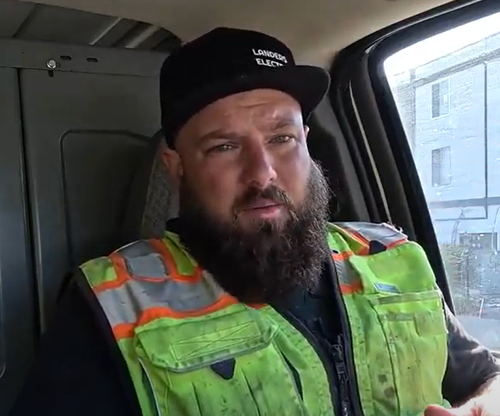
Stephan Landers is a California C-10 Electrical Contractors License holder (CSLB License #1089091) and the founder of Landers Electrical Contracting Inc. (DBA Landers Electric). With over 20 years of experience, he is dedicated to providing expert advice and quality electrical services in Temecula, CA.
You can view his professional licenses and certifications here:
About Stephan Landers
Need help with your electrical panel upgrade? Call us today for a free quote over the phone!